Sleep
The Amazing Truth About Your Internal Body Clock: Morning Person or Night Owl?
Your internal body clock may explain why some people leap out of bed before sunrise while others don’t feel fully awake until midmorning.
Picture two people.
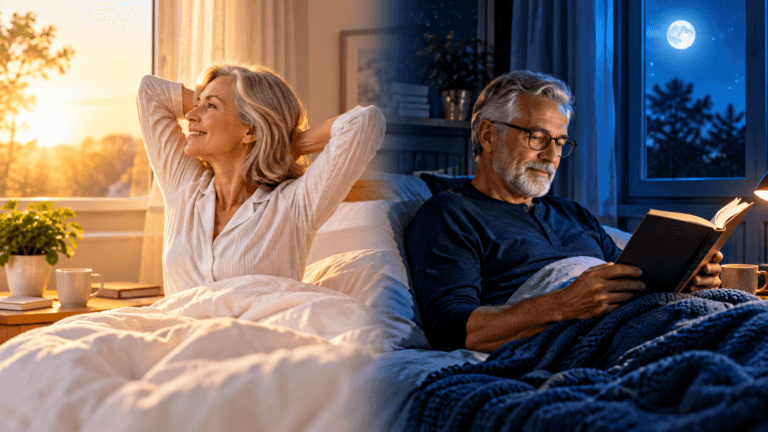
One wakes at 5:30 a.m., makes coffee, walks the dog, and finishes half the day’s chores before breakfast.
The other hits snooze three times, struggles through the morning, and suddenly feels energetic and productive at 9 p.m.
Both may be getting enough sleep. Neither is necessarily doing anything wrong.
So why the difference?
Scientists have discovered that our preference for mornings or evenings is influenced by our internal body clock. And whether you’re a morning person or night owl may have as much to do with biology as your daily habits.
Your Body Has Its Own Built-In Timekeeper
Deep inside your brain is a tiny region called the suprachiasmatic nucleus. Think of it as your body’s master timekeeper.
It helps coordinate your circadian rhythms—the roughly 24-hour cycles that influence when you feel sleepy, when you’re most alert, your body temperature, and the timing of certain hormones.
But here’s where things get interesting.
Not everyone’s internal body clock follows exactly the same schedule.
Scientists use the word chronotype to describe a person’s natural preference for being active and sleeping at certain times.
Morning types tend to feel alert earlier and prefer earlier bedtimes. Evening types often feel more energetic later and naturally prefer staying up.
Most people fall somewhere in between.
Your chronotype isn’t simply a reflection of how much coffee you drink or whether you consider yourself disciplined.
It’s partly biological.
Are You Really an Early Bird or Night Owl?
Your chronotype describes when your body naturally prefers to sleep and be awake. You don’t have to fit neatly into either category. Many people have a combination of morning and evening tendencies, and those preferences can change throughout life.
Your Genes May Have Something to Say About It
Here’s something that might surprise you.
A major genetic study published in Nature Communications examined data from nearly 700,000 people and identified 351 genetic regions associated with morning preference.
Researchers also found that people with more genetic variations associated with morning preference tended to have earlier sleep timing.
That provides compelling evidence that your internal body clock isn’t entirely a matter of choice.
Of course, genes aren’t destiny.
Your work schedule, family responsibilities, light exposure, and daily habits also influence when you sleep.
But the research helps explain why two people can follow similar routines and still feel completely different when the alarm goes off.
Your internal body clock reflects a combination of inherited tendencies and environmental influences.
Why Your Sleep Preferences May Change After 50
Remember being 25 and having no trouble staying awake until midnight?
Now you might find yourself getting sleepy during the evening news.
There’s a biological reason that can happen.
As we age, our internal body clock often shifts toward earlier sleep and wake times.
Teenagers and young adults frequently lean toward later schedules. Many older adults gradually become more comfortable going to bed and waking earlier.
The National Institutes of Health recognizes these age-related changes in circadian timing.
But that doesn’t mean everyone becomes an early riser after 50.
Some people remain devoted night owls throughout their lives.
And if you’ve noticed your schedule changing, it doesn’t automatically mean something is wrong.
Your internal body clock may simply be evolving.
Sunlight: One of Your Body Clock's Strongest Signals
Your internal body clock doesn’t operate independently of the world around you.
It takes cues from your environment, especially light.
When light enters your eyes, it sends information to the brain that helps synchronize your circadian rhythms with the outside world.
For people following a typical nighttime sleep schedule, morning daylight generally encourages earlier circadian timing, while bright light late in the evening can push it later.
That’s one reason scrolling through a brightly lit phone in bed may make it harder to fall asleep earlier.
And it’s why spending time outdoors after waking can be a useful habit.
According to the CDC, the timing of light exposure plays an important role in whether your internal body clock shifts earlier or later.
Your Body Clock Pays Attention to Light
Light isn’t just something that helps you see. It’s also an important signal that helps regulate your sleep-wake cycle. Morning daylight generally encourages earlier sleep timing, while bright evening light tends to encourage later timing. The timing and intensity of light both matter.
Can a Night Owl Actually Become a Morning Person?
This may be the question you’ve been waiting for.
If you’re naturally a night owl, can you train yourself to become an early bird?
To some extent, yes.
Your internal body clock responds to consistent environmental signals, including light exposure and daily schedules.
But there’s a difference between shifting your sleep schedule and completely changing your natural chronotype.
Someone who naturally prefers late evenings may learn to wake earlier, but that doesn’t necessarily mean they’ll suddenly love 5 a.m.
If you’re trying to adjust your internal body clock, small changes are generally more realistic than dramatic ones.
Consider these practical approaches:
- • Keep a consistent wake-up time. Try to avoid large differences between weekdays and weekends.
• Get daylight after waking. Morning light can help reinforce an earlier schedule.
• Shift gradually. If you want an earlier bedtime, move your schedule in small increments rather than suddenly changing it by two hours.
• Dim bright lights in the evening. Give your body a more consistent signal that nighttime is approaching.
• Protect your total sleep time. Waking earlier isn’t beneficial if it simply means getting less sleep.
These habits may help your internal body clock adjust, but results vary.
And if your schedule works well, allows sufficient sleep, and leaves you feeling rested, there’s no need to change it simply because someone else prefers mornings.
You Can Adjust Your Schedule Without Changing Who You Are
Consistent sleep habits and appropriately timed light exposure may help shift your internal body clock. But becoming an early riser isn’t necessarily the goal. Getting enough sleep and maintaining a schedule that works for your life matter more.
Is Being a Morning Person Actually Healthier?
We often hear that successful people wake before sunrise.
But does that mean early risers are automatically healthier?
Not necessarily.
Research has found associations between chronotype and certain health outcomes. However, those relationships are complex and may involve sleep schedules, lifestyle factors, and how well someone’s natural preferences fit their daily responsibilities.
Having an earlier internal body clock doesn’t automatically guarantee better health.
Consider someone who naturally falls asleep at midnight but must wake at 5 a.m. for work.
The problem may not be their evening preference. It may be that their schedule doesn’t allow enough sleep.
The important question isn’t simply when you wake up.
It’s whether your schedule consistently allows you to get the sleep you need.
What If Your Body Clock and Daily Life Don't Agree?
Unfortunately, the world doesn’t always accommodate our natural sleep preferences.
Work schedules, family commitments, and social obligations often require people to wake at specific times.
When your internal body clock doesn’t match those demands, you may experience a mismatch researchers sometimes call social jet lag.
It’s similar in concept to traveling across time zones, except the conflict comes from everyday schedules rather than an airplane trip.
Someone who wakes early all week but sleeps several hours later on weekends may experience this kind of inconsistency.
Recognizing the mismatch can help you make more informed decisions about bedtime, light exposure, and daily routines.
If persistent sleep difficulties or excessive daytime sleepiness interfere with daily life, a healthcare professional can help evaluate possible causes.
Maybe You Don't Need to Change Your Internal Body Clock
There’s something reassuring about the science of chronotypes.
Not everyone is designed to feel their best at the same hour.
Some people love quiet mornings. Others do their best thinking when the rest of the house has gone to bed.
And many of us fall somewhere in the middle.
Your internal body clock is part of a complex biological system influenced by genetics, age, environment, and everyday habits.
You may be able to adjust that system, but you don’t necessarily need to fight it.
Perhaps the better question isn’t whether you should become a morning person.
It’s whether you’ve been expecting your body to follow someone else’s clock.
References
Like? Share with Your Friends!