Bone Health
Why Calcium Absorption Matters More Than Intake: The Hidden Key to Bone Support Across 3 Stages of Life
Calcium absorption matters more than intake, yet many people still focus primarily on how much calcium they consume rather than how effectively their body uses it. This distinction becomes especially important over time, as the body’s ability to absorb and utilize nutrients can gradually change.
For years, bone health conversations have centered around increasing calcium intake. But emerging insights—particularly from the work of Takuo Fujita—suggest that this approach may overlook a critical factor: bioavailability, or how well calcium is absorbed and delivered where the body needs it most.
Sponsored Content from LaneInnovative
The Shift: From “More Calcium” to “Better Absorbed Calcium”
One of the most important concepts in modern bone health research is often referred to as the “calcium paradox.” In simple terms, it highlights that higher calcium intake does not always translate to better bone outcomes.
Dr. Fujita observed that populations consuming large amounts of calcium still experienced significant bone loss, while others with lower intake maintained stronger bone health. The difference, he suggested, lies in how efficiently calcium is absorbed and utilized—not just how much is consumed.
Research has also shown that calcium absorption efficiency can change with age. This means that simply increasing intake may not address the underlying issue if the body is not effectively using what it receives.
The Man Behind the Research: Dr. Takuo Fujita
Dr. Takuo Fujita, M.D., a recognized researcher in bone metabolism, helped bring attention to the concept that calcium absorption—not just intake—plays a critical role in long-term bone health. His work spans decades of research into calcium’s role in aging, parathyroid function, and nutrient utilization.
In his 1987 book Calcium and Your Health, Dr. Fujita explored the physiological importance of calcium, the potential effects of deficiency, and practical approaches to supporting intake and utilization. His research contributed to a broader understanding that how calcium is absorbed may be just as important as how much is consumed.
Dr. Fujita also studied highly bioavailable forms of calcium, including Active Absorbable Algal Calcium (AAACa), identifying its potential to be more efficiently absorbed. His work further examined how calcium balance and parathyroid hormone activity may influence the aging process.*
Together, these findings helped shape a more modern perspective on bone health—one that emphasizes calcium absorption, bioavailability, and long-term nutrient utilization.*
Why Calcium Absorption Changes Over Time
Calcium absorption is influenced by several factors, including:
- digestive function
- vitamin D status
- nutrient balance
- age-related metabolic changes
As these factors shift, the body may become less efficient at transporting calcium into the bloodstream and ultimately into bone tissue.
This is why the conversation around bone health is evolving—from quantity-focused to efficiency-focused.
Calcium Fact
Calcium absorption efficiency tends to decline with age, which may influence how effectively the body uses the same amount of calcium over time.
Understanding Bioavailable Calcium
Not all calcium forms are utilized in the same way. Some forms rely heavily on stomach acid for breakdown, while others are designed to be more readily absorbed.
One example is Active Absorbable Algal Calcium (AAACa), a form of calcium studied by Dr. Takuo Fujita for its bioavailability. Unlike more common forms such as calcium carbonate—which typically rely on stomach acid for breakdown and absorption—AAACa is structured to be more readily soluble and may be absorbed efficiently even in individuals with lower stomach acid levels.*
In certain formulations, AAACa is combined with amino acid complexes designed to support transport across the intestinal lining, helping facilitate how calcium moves into the bloodstream. This reflects a broader shift toward focusing not just on how much calcium is consumed, but on how effectively it can be absorbed and utilized by the body.*
Did You Know?
Different forms of calcium are absorbed at different rates. Some formulations are designed to support greater bioavailability compared to more conventional forms.
The Research Behind AAACa
Research involving AAACa has explored its potential role in supporting calcium absorption and long-term bone health. In studies referenced by Dr. Takuo Fujita and other researchers, AAACa demonstrated significantly higher absorption compared to conventional calcium forms, helping reinforce the importance of bioavailability and nutrient utilization in bone health support. Additional published research has also examined how highly absorbable calcium formulations may support bone metabolism over time.*
Fujita T. Various medical journals (1990, 1996, 1997, 2000)
Uenishi et al. Nutrients (2010) 2, 752–761
Did You Know?
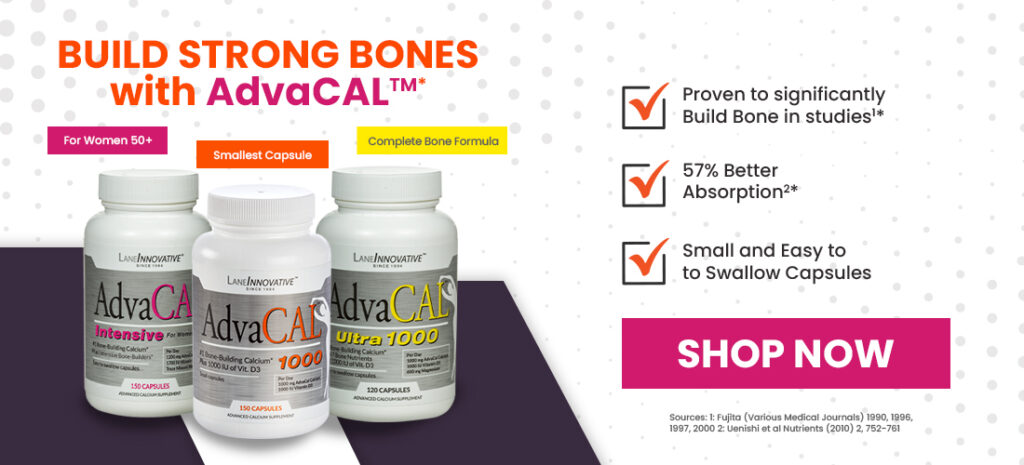
One published study reported up to 57% greater absorption of AAACa compared to calcium carbonate.
Sources: Uenishi et al. Nutrients (2010) 2, 752–761
Bone Support Needs Aren’t One-Size-Fits-All
Another important consideration is that bone health needs can evolve over time. Rather than being defined strictly by age, these needs often reflect:
- lifestyle patterns
- nutritional habits
- changes in calcium absorption
- individual health awareness
As these factors change, so can the way the body responds to nutrients—including calcium. This is why a more personalized approach to bone health support has become increasingly important.
In response to these differences, some formulations are designed to provide varying levels of support based on changing needs over time—focusing not only on calcium intake, but also on how effectively it is absorbed and utilized.
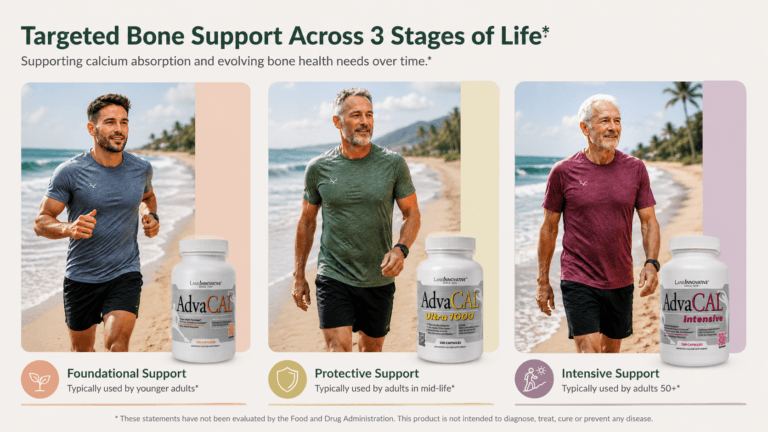
AdvaCAL was developed with this approach in mind, offering different levels of support designed to align with evolving nutritional needs. Each AdvaCAL formula incorporates AAACa (Active Absorbable Algal Calcium), the same highly bioavailable form of calcium studied for its absorption and utilization, across all three products.*
STAGE 1: Foundational Support for Everyday Bone Maintenance*
For individuals focused on maintaining bone health early and consistently, a foundational approach often emphasizes simplicity, routine, and ease of use.
AdvaCAL is designed with this type of daily support in mind. It provides calcium in a form developed to support absorption, along with vitamin D₃, in a smaller capsule format for convenience.*
In younger adulthood, bone health is often something people don’t actively think about yet. However, this stage represents an important time for building long-term nutritional habits and supporting ongoing bone maintenance before age-related changes begin to occur. Busy schedules, inconsistent eating habits, and lower awareness around bone health can sometimes make it difficult to maintain steady nutrient intake over time.
This type of formulation may be especially well suited for younger adults or individuals looking for simple, foundational daily support. The smaller capsule size and streamlined formula make it easier to incorporate into a consistent wellness routine, while the inclusion of AAACa calcium helps emphasize absorption and utilization—not simply calcium quantity alone. It can be used by both men and women as part of a balanced, long-term approach to wellness.*
STAGE 2: Protective Support for Mid-Life Bone Health Support*
As people move through mid-life, changes in nutrient absorption and bone metabolism may begin to emerge more noticeably. This stage often represents a critical window for supporting bone health before more significant changes occur.
AdvaCAL Ultra 1000 is designed as a more complete, protective support option. It provides 1,000 mg of AAACa calcium along with vitamins D₃ and K₂, plus additional key nutrients and HAI, all formulated to support bone health during this transitional stage.*
For many adults over 40, bone health becomes more of an active consideration. Lifestyle stress, changing nutritional needs, and natural shifts in absorption may begin to influence how efficiently the body uses calcium and other nutrients. At the same time, many people are looking for more comprehensive support that goes beyond calcium alone.
This type of formulation may be especially well suited for adults over 40 who want more targeted, protective nutritional support as age-related changes begin to develop. By combining highly bioavailable AAACa calcium with vitamin K₂, magnesium, and additional supportive nutrients, the formula is designed to provide broader nutritional support for both men and women during this stage of life.*
Calcium Insight
Nutrients like vitamin D, magnesium, and vitamin K₂ are often discussed alongside calcium because they play roles in how the body processes and utilizes minerals.
STAGE 3: Intensive Support for Advanced Bone Health Focus
At later stages—or for individuals who are more focused on bone health—a higher level of nutritional support may be considered. This can reflect more noticeable changes in absorption and overall bone density support needs.
AdvaCAL Intensive is designed to provide a higher level of calcium along with essential cofactors and HAI, with continued emphasis on absorption and utilization.*
By the time many adults reach their 50s and beyond, bone health often becomes a more active priority. Hormonal changes, age-related shifts in calcium absorption, and long-term nutritional patterns may all begin to play a larger role in how the body maintains bone strength over time. At this stage, some individuals may look for a more comprehensive formula designed to provide higher-level daily nutritional support.
This type of formulation may be especially well suited for men and women over 50, or those who are more focused on supporting bone health at a more advanced stage. With increased calcium levels and a broader combination of supportive nutrients, AdvaCAL Intensive is designed for individuals seeking a more focused approach to long-term bone health support and nutrient utilization.*
Bone Health and Hormonal Changes
For many women, changes in bone health awareness may become more pronounced during and after menopause. Shifts in hormone levels can influence how the body maintains bone density and utilizes key nutrients over time.
Because calcium absorption and bone metabolism may change during this stage, nutritional support that emphasizes both absorption and comprehensive formulation can become increasingly relevant.
At this stage, formulations such as AdvaCAL Intensive—designed for men and women over 50 or those at higher risk of bone loss—may be considered as part of a more focused approach to supporting bone health.*
While bone health is important for both men and women, this phase represents an important window where women may choose to take a more proactive approach to supporting long-term bone strength.
The Role of Nutrient Synergy
Calcium does not function alone in the body. Its effectiveness is influenced by a network of nutrients and biological processes.
For example:
- Vitamin D supports calcium absorption
- Magnesium contributes to mineral balance
- Trace minerals help regulate bone metabolism
This interconnected system reinforces the idea that bone health is not about a single nutrient—but about how multiple factors work together over time.
A More Balanced Perspective on Bone Health
One of the most important takeaways from modern research is that bone health is a long-term process. It is shaped by:
- consistent daily habits
- nutrient intake
- physical activity
- and how efficiently the body uses available nutrients
Rather than focusing solely on increasing intake, a more balanced approach considers:
- how nutrients are absorbed
- how they are utilized
- and how needs evolve over time
Lifestyle Still Plays a Foundational Role
While nutritional support can be an important part of maintaining bone health, it works best alongside consistent daily habits.
Weight-bearing movement, balanced nutrition, and adequate sleep all contribute to how the body maintains strength and stability over time. Regular physical activity helps support natural bone remodeling processes, while nutrient-rich foods provide the building blocks the body relies on.
Sleep also plays a role in overall recovery and metabolic balance, which can indirectly influence how nutrients are utilized.
Together, these lifestyle factors create a foundation that supports long-term bone health—working in combination with thoughtful nutritional choices.
Did You Know?
Weight-bearing activities—like walking or resistance exercises—help stimulate natural bone remodeling processes over time.
Bringing It All Together
Modern bone health conversations are evolving beyond calcium quantity alone and placing greater emphasis on absorption, bioavailability, and nutrient utilization over time.
Dr. Fujita’s research helped reinforce the idea that how calcium is absorbed may play an important role in long-term bone health support—particularly as nutritional needs change with age.
This more balanced perspective considers not only calcium intake, but how effectively the body can use the nutrients it receives.
Final Thoughts
Bone health is not static—it evolves over time. As the body changes, so do its nutritional needs.
By focusing on:
- calcium absorption
- nutrient synergy
- and stage-appropriate support
individuals can take a more informed approach to long-term wellness.
Rather than asking, “Am I getting enough calcium?”
the more meaningful question may be:
👉 “How well is my body using the calcium I take?”
Like? Share with Your Friends!