Digestive Health
Prebiotics + Probiotics = Synbiotics: A Better Way to Nourish Your Gut
Synbiotics are gaining attention in digestive health because they reflect a simple but often overlooked truth: your gut doesn’t work on single ingredients — it works as a system.
Many people are familiar with probiotics and their role in supporting digestive balance. But focusing on probiotics alone can miss an important part of the picture. Beneficial microbes need the right environment and nourishment to stay active. Without that support, even well-chosen strains may not be able to do much.
That’s why a more complete approach to gut health looks at how different components work together, rather than in isolation.

Probiotics: Helpful Microbes With Different Roles
Probiotics are live microorganisms that interact with the digestive tract as they move through it. Rather than acting as permanent residents, many probiotics work more like temporary visitors — influencing the gut environment during their stay. Because of this, not all probiotics behave the same way. Some are bacterial strains, others are yeast-based, and each brings different strengths.
For example, Saccharomyces boulardii is a beneficial yeast often chosen for its ability to remain active during digestion. Spore-forming bacteria such as Bacillus coagulans are selected for their stability and resilience in harsh digestive conditions. These types of strains don’t need to “move in” to be useful — their value comes from how they interact with the gut while they’re there.*
In practical terms, probiotics help support balance. When the gut environment is more balanced, digestion tends to feel steadier and less reactive. That’s why probiotics are often described as supportive rather than corrective — they help reinforce normal digestive processes instead of forcing change.
On their own, probiotics can be helpful — but they don’t operate in a vacuum.
Prebiotics: The Missing Piece Many People Overlook
Prebiotics are not live organisms. Instead, they are fermentable fibers and polysaccharides that serve as nourishment for beneficial microbes already living in the gut. If probiotics are the workers, prebiotics are the fuel that keeps them active.
Ingredients such as fructooligosaccharides (FOS) are well known for their ability to feed beneficial bacteria. Certain naturally fermented polysaccharides, including kefiran, also act as substrates that microbes can utilize during fermentation. When microbes are properly nourished, their activity becomes more consistent and efficient — which helps maintain a stable digestive environment.*
This nourishment matters because microbes can only do so much without it. Without prebiotics, probiotics may pass through the digestive system without having the opportunity to interact meaningfully with their surroundings. Supporting digestion isn’t just about adding more — it’s about giving the system what it needs to function smoothly.
When Both Are Present: The Synbiotic Concept
When probiotics and prebiotics are paired together, they form what are known as synbiotics — combinations designed to support microbial activity and nourishment at the same time.
Rather than asking beneficial microbes to survive on their own, synbiotics recognize that microbes need fuel. This pairing mirrors how the digestive system naturally functions, where fermentation depends on both organisms and substrates being available together.
Gut health isn’t about adding more bacteria — it’s about helping beneficial microbes stay active and supported.
Where Postbiotics Enter the Conversation
As beneficial microbes ferment fibers and polysaccharides, they naturally produce compounds known as postbiotics. These include short-chain fatty acids and organic acids that play a role in maintaining the gut’s normal environment.
Postbiotics help support the conditions that beneficial microbes prefer — including proper pH balance, fermentation activity, and microbial stability. In simple terms, they are part of what makes a well-functioning gut feel balanced and comfortable.
Importantly, postbiotics are not something you swallow. They are created inside the gut when fermentation is supported. This means their presence depends on both the microbes involved and the nourishment available to them.
By bringing probiotics and prebiotics together, synbiotics help encourage this natural process, allowing beneficial compounds to be produced as a result of normal digestive activity rather than forced from the outside.
Postbiotics are the natural byproducts of a nourished gut — created when beneficial microbes are supported and fermentation is active.
Once you understand how postbiotics are produced through fermentation, the role of individual ingredients becomes easier to see. Different components support different parts of the process — from nourishment to activity to collaboration.
Why This Matters for Everyday Digestive Health
Digestive comfort, balance, and regularity are not static — they reflect ongoing processes in the gut. Supporting those processes means thinking beyond quick fixes and focusing on consistency.
By encouraging cooperation between microbes and fermentable substrates, synbiotics align more closely with how the digestive ecosystem functions day to day. Instead of forcing one element to do all the work, the system is supported as a whole.
Ingredient Categories That Support a Synbiotic Approach
A synbiotic strategy becomes clearer when you look at how different ingredients fit into functional categories.
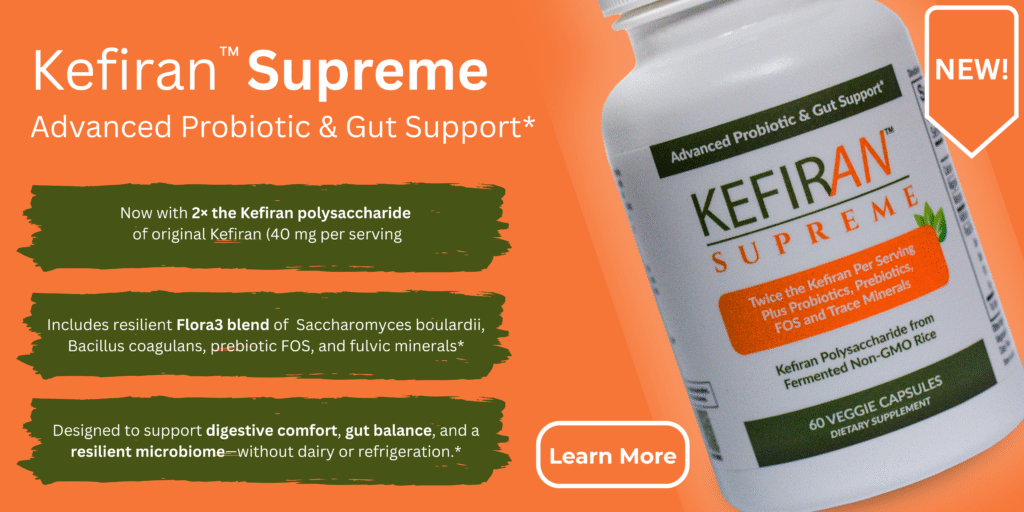
Prebiotic components, such as fermentable fibers and polysaccharides like FOS and kefiran, help nourish beneficial microbes and support fermentation.*
Probiotic components, including resilient yeast strains like Saccharomyces boulardii and spore-forming bacteria such as Bacillus coagulans, are selected for their ability to remain active during digestion.*
Synbiotic formulations bring these elements together, allowing microbes and nourishment to work in tandem rather than separately.
This category-based approach helps explain why combinations often make more sense than single-ingredient solutions.
A More Thoughtful Way to Nourish the Gut
Gut health doesn’t need to be complicated, but it does benefit from being intentional. A strategy that includes both microbial support and nourishment acknowledges that digestion is dynamic and interconnected.
That’s why synbiotics continue to attract interest among researchers and health-conscious consumers alike — they emphasize balance, cooperation, and natural processes rather than isolated actions.
Key Takeaway
Digestive health is not driven by a single ingredient or mechanism. Probiotics, prebiotics, fermentation, and postbiotics all play interconnected roles. By supporting how these elements work together, synbiotics offer a more complete and human-centered way to nourish the gut.
References
Like? Share with Your Friends!